
Water Heater Installation in Canyon Lake: Choosing the Unit, Meeting Code and Getting It Done
Replacing a water heater starts with one decision: repair the old unit once more, or install a new one now, before it fails at a bad moment. Call the dispatch line and a plumber can talk through the unit, the code items and the installation.
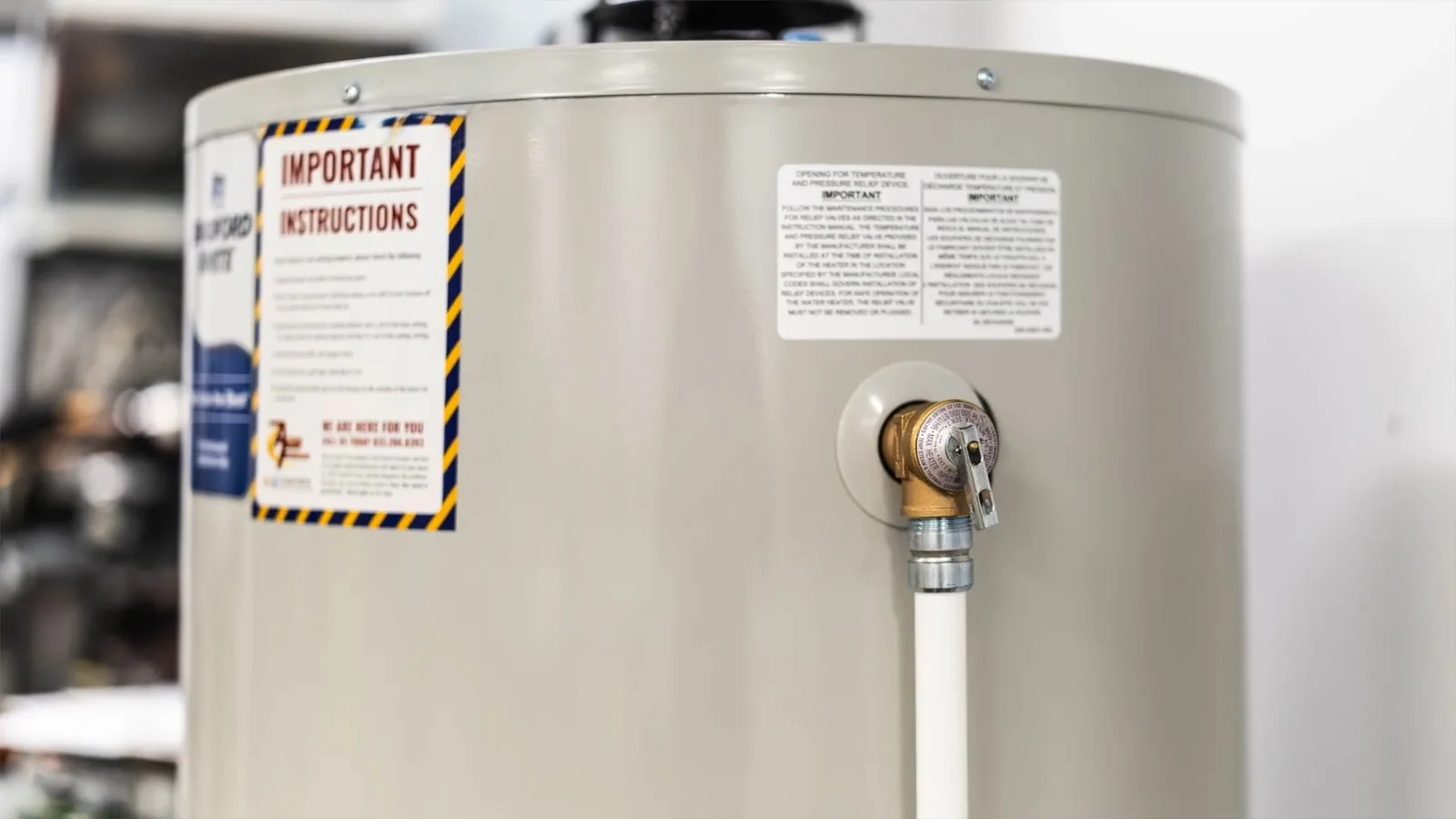
- Licensed and insured plumbers
- Same-day service when available
- 24/7 emergency dispatch
Tank, tankless or heat pump: the choice behind the install
Before anyone schedules an installation, settle what kind of heater goes in. The answer depends on the fuel the house already has, the space around the old unit and how much hot water the household uses at the same time. The table sets out the common options and what each one asks of the house.
| Type | Best suited to | What the house needs |
|---|---|---|
| Gas tank | Homes with a gas line and a vented closet or garage space | Gas connection, venting, strapping, relief valve discharge |
| Electric tank | Homes without gas, or where venting is hard | A dedicated circuit sized for the unit, strapping, relief valve discharge |
| Tankless | Households that want a small footprint and steady hot water | Larger gas supply or heavy electric load, venting, regular descaling |
| Heat pump (hybrid) | Homes with open space around the unit and a mild garage or utility room | Electric circuit, clearance for air flow, a condensate drain |
If the leading candidate is tankless, the page on tankless water heater options covers sizing, descaling and service. Smaller point-of-use and under-sink units also exist for a single sink or a far-off bathroom, and a plumber can say whether one makes sense alongside the main heater.
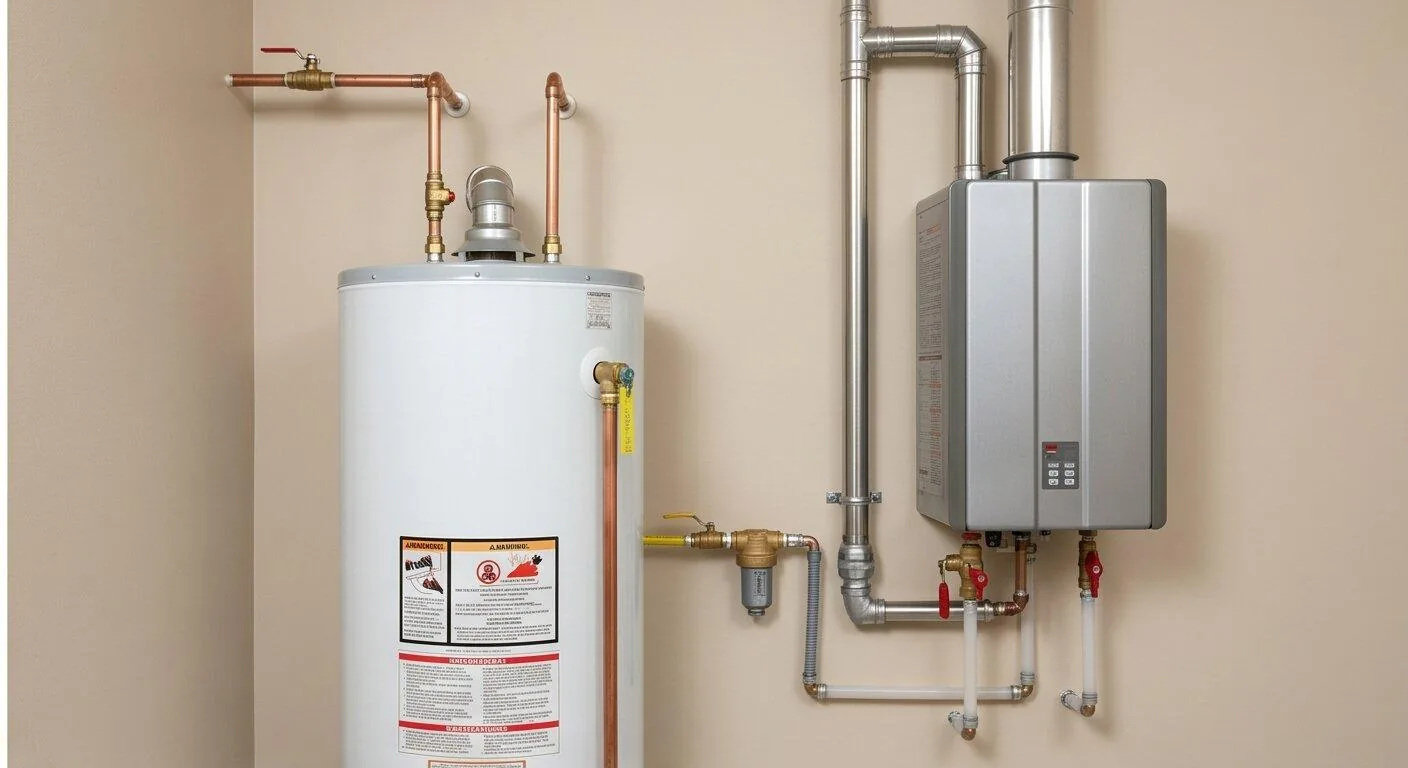
Canyon Lake water heater permit, strapping and expansion tank
A water heater installation is more than swapping one tank for another. Three items sit beside every replacement and are easy to skip when the focus is on getting hot water back: the permit, the seismic strapping and, where the house has a pressure regulator, the expansion tank. Each one has a reason behind it, and each one is worth asking about before the work starts.
Ask the plumber who pulls the permit with the City of Canyon Lake Building and Safety, whether the quote includes strapping and whether the water pressure was tested. Skipped steps tend to surface later, when a home is sold or an inspector looks at the closet.
New gas runs, capped lines and leak repairs for the heater fall under gas line installation, and a plumber can price both parts together.
Do you need to replace the whole water heater?
Not every problem calls for a new heater. A failed element, thermostat or pilot assembly is a repair, and a unit in the middle of its life is usually worth keeping running. A leaking tank, rust-colored hot water or a string of repairs close together is where replacement starts to make more sense.
- The tank itself leaks, not just a fitting or valve
- Hot water comes out rusty or smells of metal
- The label date shows the unit is well past ten years old
- Sediment noise returns soon after every flush
- Two or more parts have failed within a short time
- The household has outgrown the tank size
When the symptoms are not clear, water heater repair help is the first call, and the plumber can say on the spot whether a part will do. Tank size matters too. A household that runs out of hot water on busy mornings may need a larger unit than the old one, while a smaller household may do well with the same size or less.
Ready to plan a new water heater?
Call now and describe the old unit, the fuel and the space around it. A plumber can walk through the options.
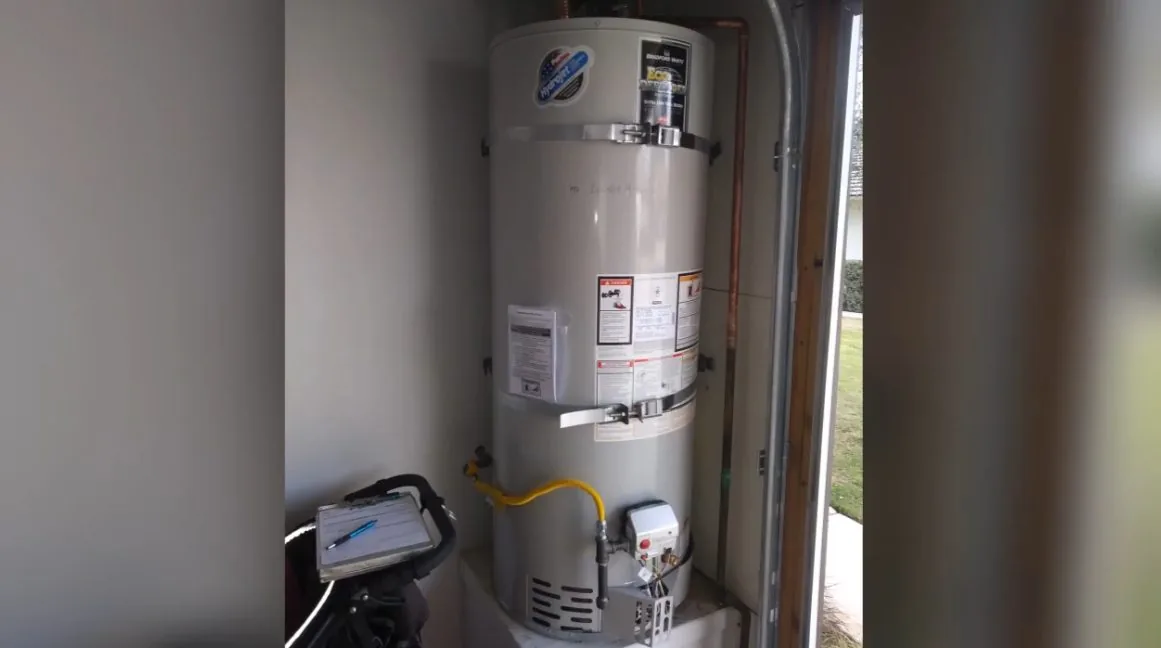
Water heater installation: what happens on the day
A standard tank replacement is a half-day job for a plumber working alone, and the order of steps is much the same for gas and electric. Knowing the sequence helps you plan for the interruption, and it gives you a way to check the work afterwards.
- The plumber shuts off the water, gas or power and drains the old tank.
- The old unit is disconnected and removed, and the pan and floor are checked for damage.
- The new heater is set, strapped to the wall and connected to water, gas or electric.
- Relief valve, discharge pipe, shutoff valve and expansion tank are installed or checked.
- The tank is filled, air is purged from the lines and the burner or elements are started.
- Temperature, venting and connections are tested, and the permit inspection is arranged.
Plan to be home for the start and the end of the visit. At the end, ask the plumber to show you the shutoff valves, the temperature setting and where the strapping is attached, so you know how to isolate the heater in an emergency.
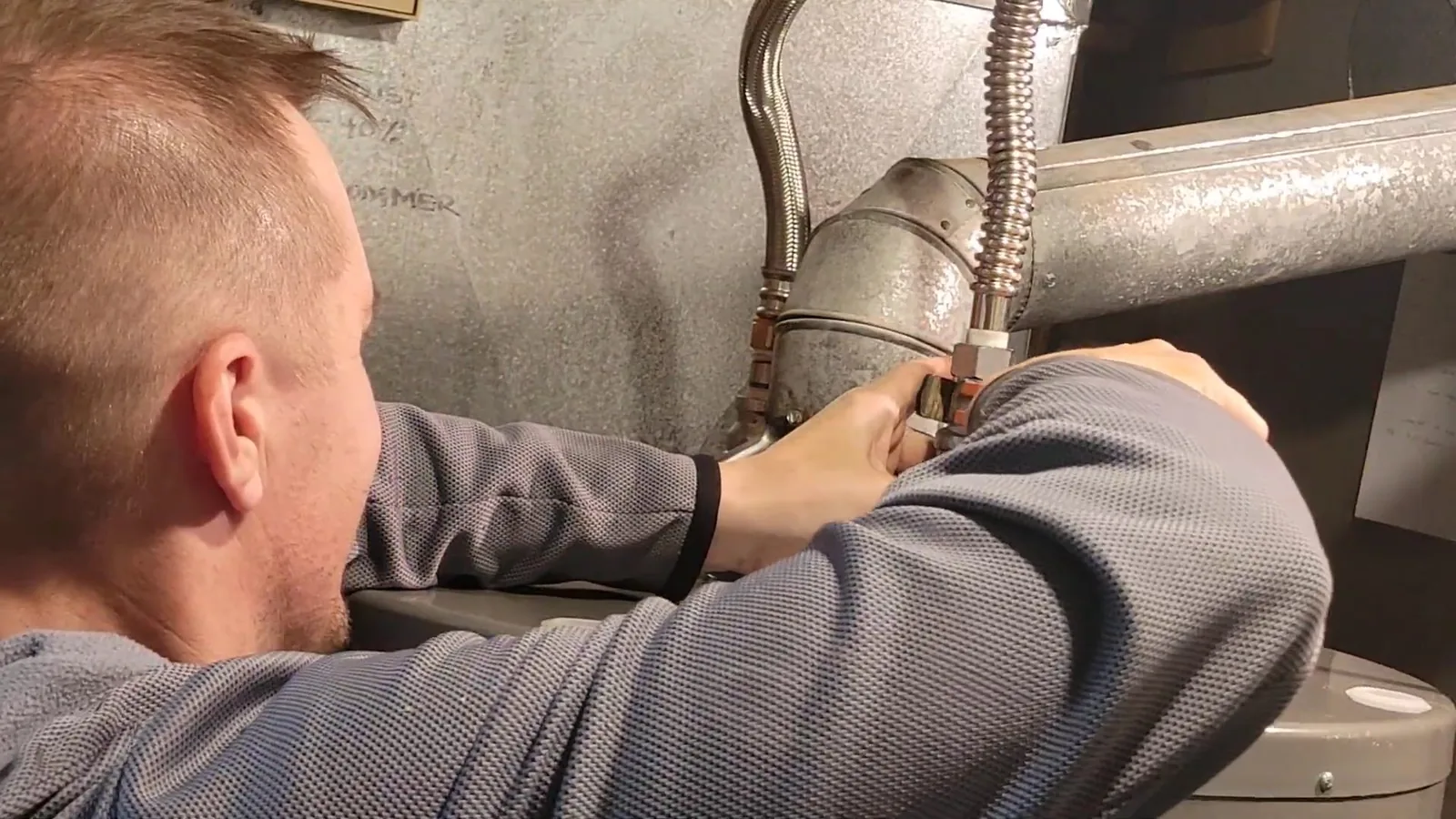
Hard water and your new heater
Water quality shapes how long a heater lasts. Minerals come out of hot water and settle on the bottom of a tank or on the heat exchanger of a tankless unit, which shortens life and cuts efficiency. Local water hardness is a good reason to think about the heater and the water supply together instead of in isolation.
A simple home test shows what your own tap delivers, which matters more than the average. If it reads hard, a plumber may suggest a water softener ahead of the heater, or a flushing schedule that keeps the tank clear of sediment.
Who should install it, and what to ask
Plumbing is a licensed trade in California, and water heater work involves gas, water and often a permit. Before agreeing to a job, ask the plumber for license details, and check the status on the Contractors State License Board site, which lists plumbing as classification C-36.
A few questions are worth asking whatever the unit: what is included in the quote, whether old unit disposal is covered, who pulls the permit, and what warranty applies to the unit and to the labor. Gas and electric hookups are code-regulated work, so a handyman is not the right choice here.
Book the swap before the old tank fails
Call the dispatch line to talk through the unit, the permit and the timing.
Water heater installation questions
Does replacing a water heater really need a permit?
Yes, in nearly every case. The state plumbing code calls for a permit on a swap, and Canyon Lake enforces the codes through its Building and Safety department. The plumber normally arranges it. Ask who is pulling it, because an unpermitted swap can cause trouble when the house is sold or inspected.
Can I switch from a gas water heater to an electric one?
Switching to electric needs a dedicated circuit with enough capacity, and the gas line to the old heater is capped. Switching to gas needs a gas supply and a proper vent. A plumber can look at the closet, the panel and the gas connection to tell you what the change would involve.
How do I know what size water heater to get?
Size follows peak demand. Count the people, the bathrooms and whether showers, a dishwasher and laundry tend to run together. The plumber matches tank capacity or tankless flow rate to that pattern, rather than simply copying the old unit.
What is an expansion tank and does my heater need one?
An expansion tank absorbs the extra volume water takes up as it heats, which stops pressure spikes in a closed system. California code calls for one where a pressure regulator is installed. A plumber can test your static pressure and see whether a regulator is present before adding one.
Plan the swap before the old heater fails
Ring at any hour and talk through the unit, the permit and the install with a plumber who covers Canyon Lake.
- Licensed and insured plumbers
- Same-day service when available
- 24/7 emergency dispatch