
Hard Water in Canyon Lake: Softeners, Filters and Reverse Osmosis
Local water tests show moderately hard to hard water in the district that serves the city, and the signs show up on fixtures, in the water heater and on dishes. A call to dispatch gets you a plumber who can walk through which treatment, if any, makes sense.
- Licensed and insured plumbers
- Same-day service when available
- 24/7 emergency dispatch
How hard is the water, and what does it do at home?
Hardness is dissolved calcium and magnesium. It is harmless to drink, but it leaves scale on faucets and shower glass, and it settles inside water heaters and pipes. Treatment starts with knowing how hard the tap water is at your address, since readings vary across a distribution system.
- White crusty deposits on faucets and showerheads
- Spots on glasses and dishes after the dishwasher runs
- Soap that does not lather well and leaves a film
- Stiff laundry and dry-feeling skin after a shower
- Water heaters that rumble from scale on the tank bottom
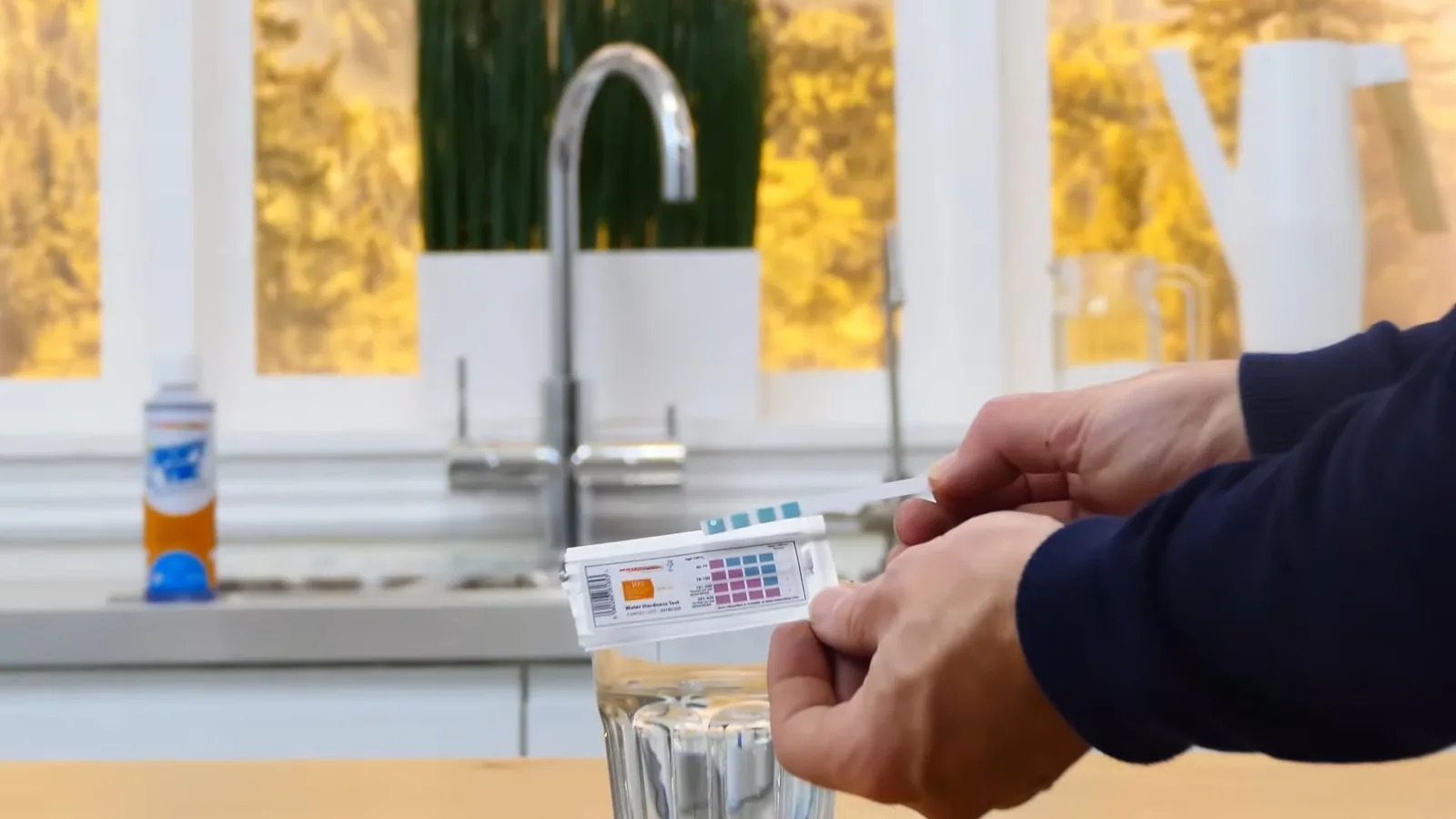
A simple test kit shows your own hardness in minutes. A plumber can run one and also check whether the supply comes from EVMWD or EMWD, since the city is split between two districts, and that bill detail helps pick the right report to read.
Water softener installation
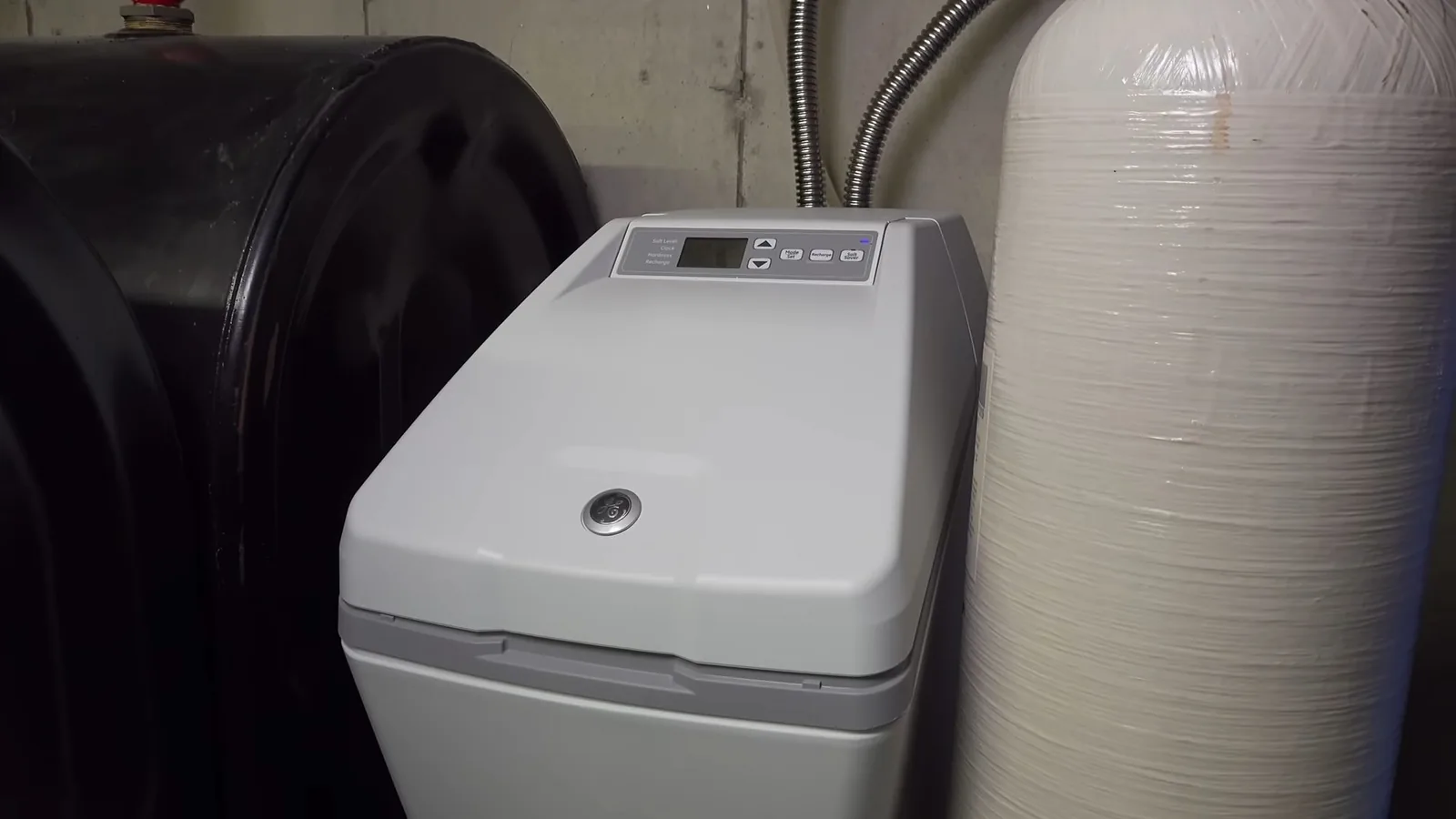
A softener swaps hardness minerals for sodium or potassium as water passes through resin beads. When the beads fill up, the system regenerates with brine, flushes the minerals out and starts again. That cycle is where salt, water use and drain connections come into play.
| Decision | What to settle | Why it matters |
|---|---|---|
| Size | Household size and hardness reading | Controls how often the unit regenerates |
| Location | Near the main line and a drain | The unit needs a drain and a power outlet |
| Bypass | A valve to isolate the unit | Allows service without shutting off the house |
| Outdoor taps | Whether irrigation gets softened water | Softened water is not needed for plants |
| Salt type | Sodium or potassium salt | Affects cost and sodium in the water |
Ask where the regeneration water will drain and whether the sewer provider has any rules about it. The plumber should be able to answer, or point you to who can.
Softener repair and service
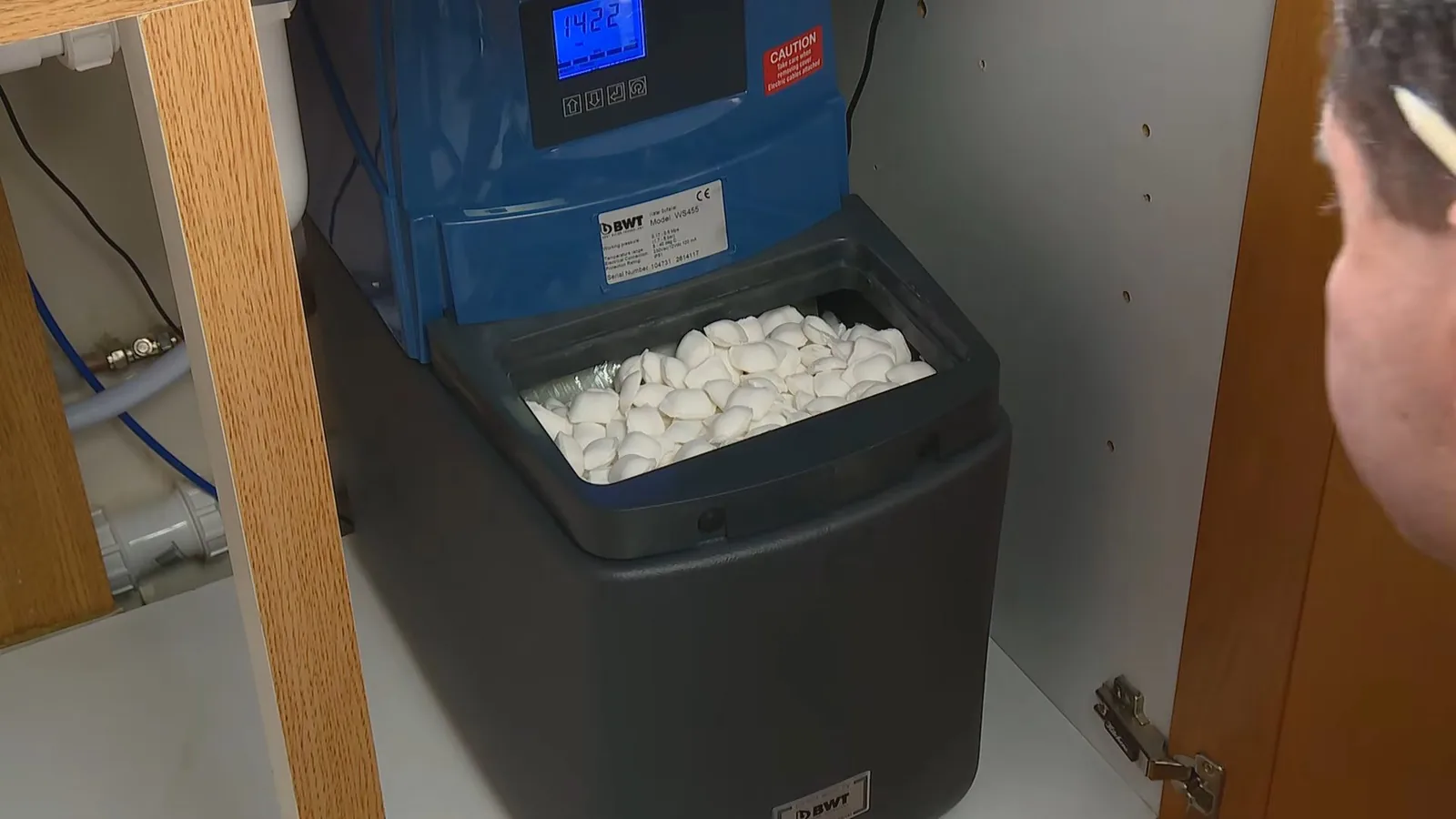
Softeners are simple machines, but they fail in predictable ways. A unit that stops producing soft water often has an empty salt tank, a bridged salt layer or a fouled resin bed. Errors in the control head, a stuck valve or a clogged injector are the other usual causes.
- No soft water: check the salt level and break up any crust in the brine tank
- Salty-tasting water: the unit may not be rinsing properly
- Constant drain noise: a stuck valve or failed seal
- Unit never regenerates: control head or sensor trouble
- Low pressure: resin bed fouled or a clogged inlet screen
A plumber can service the valve, replace seals and clean the injector, and scale damage inside a tank is a separate matter handled under tank water heater repair, or recommend a new unit if the tank is cracked or the resin has worn out. Age matters, so note when the softener was installed and how often it has needed service.
Want to know what is in your water?
Ask for a hardness test and a plain answer on whether a softener, a filter or both fit.
Whole-house filtration versus drinking-water filters
A softener treats hardness. It does not remove chlorine taste, sediment or most contaminants, so it is one tool in a treatment plan rather than the whole plan. Whole-house filters catch sediment and reduce chlorine for every tap, while under-sink and countertop units focus on the water you drink and cook with.
Under-sink and reverse osmosis
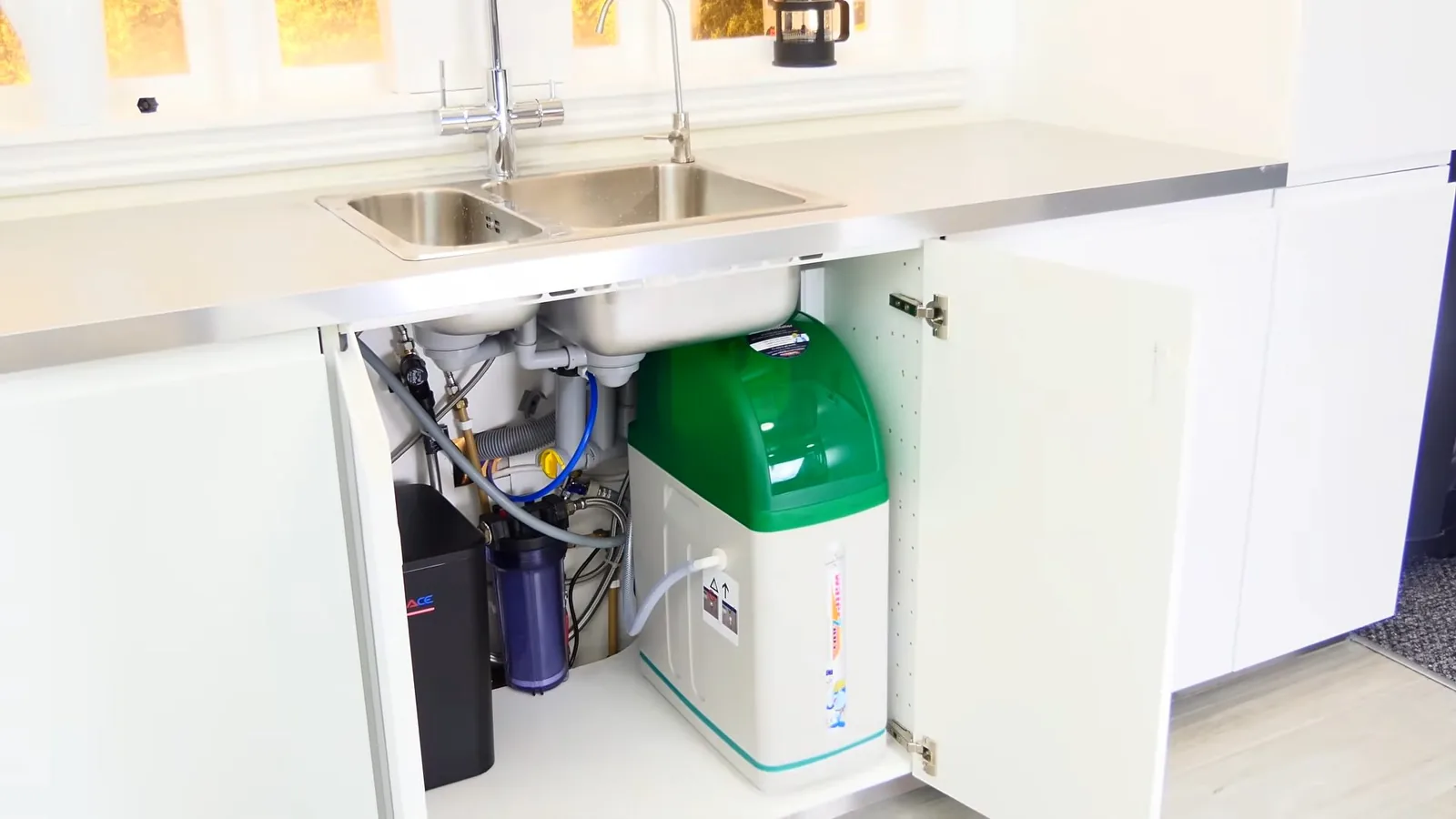
Reverse osmosis pushes water through a fine membrane and produces a small stream of very clean water at a dedicated faucet. It needs a drain connection and a storage tank, and filters and the membrane are replaced on a schedule. It suits drinking water, not the whole house.
Whole-house filters
A filter at the main line protects fixtures and appliances from sediment and improves taste at every tap. Cartridges need replacing on a schedule, and pressure can drop as they clog. Ask the plumber about filter size and how to change one.
Maintenance, salt and what to keep an eye on
A softener runs best when its salt tank stays at least a third full and the brine tank is cleaned once a year. Water filters and reverse osmosis cartridges have replacement dates that are easy to forget. Set a reminder when they are installed, and write the install date on the unit so the next person knows its age.
Pay attention to changes. A softener that suddenly leaves water hard, a filter that drops pressure or a faucet that spits air each point to something specific, and catching the change early keeps a small repair from becoming a full replacement.
- Check the salt level monthly and top it up before it runs low.
- Break up any hard crust on top of the salt.
- Replace filter cartridges on the schedule in the manual.
- Test hardness occasionally to confirm the system still works.
- Book a service visit if the water changes in taste or feel.
Scale is wearing out your plumbing
Phone dispatch to book a hardness test and talk through treatment options.
Water treatment questions
Is a water softener worth it in Canyon Lake?
It depends on your tap hardness and how much scale bothers you. Local water tests show a wide spread, so test your own tap first. If it reads hard, a softener protects the water heater, fixtures and appliances from scale and makes soap work better.
What is the difference between a softener and a filter?
A softener removes hardness minerals. A filter removes sediment, chlorine taste or other contaminants, depending on the type. They do different jobs, and many homes use both, with the filter ahead of the softener.
Does reverse osmosis remove hardness?
It reduces many dissolved minerals at the drinking tap, but it is not meant to soften the whole house. A reverse osmosis system gives clean water at one faucet, while a softener treats everything the house uses.
How often does a softener need service?
Check the salt monthly and plan an annual look at the brine tank and valve. A plumber can service the control head, clean the injector and replace seals. Resin lasts many years but wears out eventually, and low pressure or hard water returning are the signs.
Softer water, cleaner fixtures
Ring at any hour to schedule a softener, a filter or a service visit.
- Licensed and insured plumbers
- Same-day service when available
- 24/7 emergency dispatch