
Tankless Hot Water Heater in Canyon Lake: Who It Suits, What It Needs and How to Keep It Running
A tankless water heater warms water as it flows, so there is no tank to run out and no standby heat to pay for. It suits some homes well and others poorly. Call the dispatch line to learn which group yours is in.
- Licensed and insured plumbers
- Same-day service when available
- 24/7 emergency dispatch
Who a tankless heater suits, and who it does not
A tankless unit heats water on demand with a burner or heating elements, so hot water lasts as long as the unit can keep up with the flow. That makes it a good match for households that run out of hot water or want a heater that takes little wall space. It is less of a match where the house cannot supply the gas or power the unit needs.
| Question | A tankless heater fits when | Think twice when |
|---|---|---|
| Hot water use | Showers and laundry run at different times, or the household is small | Several showers and appliances often run at the same moment |
| Fuel supply | The gas line can be upsized, or the panel has room for the electric load | The meter, line or panel cannot carry the unit without major work |
| Space | Wall space is limited and a tank would crowd the closet | There is no safe route to vent a gas unit to the outside |
| Water quality | The water is soft or a softener is in place | The water is hard and no one will descale the unit regularly |
Tankless descaling, flushing and maintenance in Canyon Lake
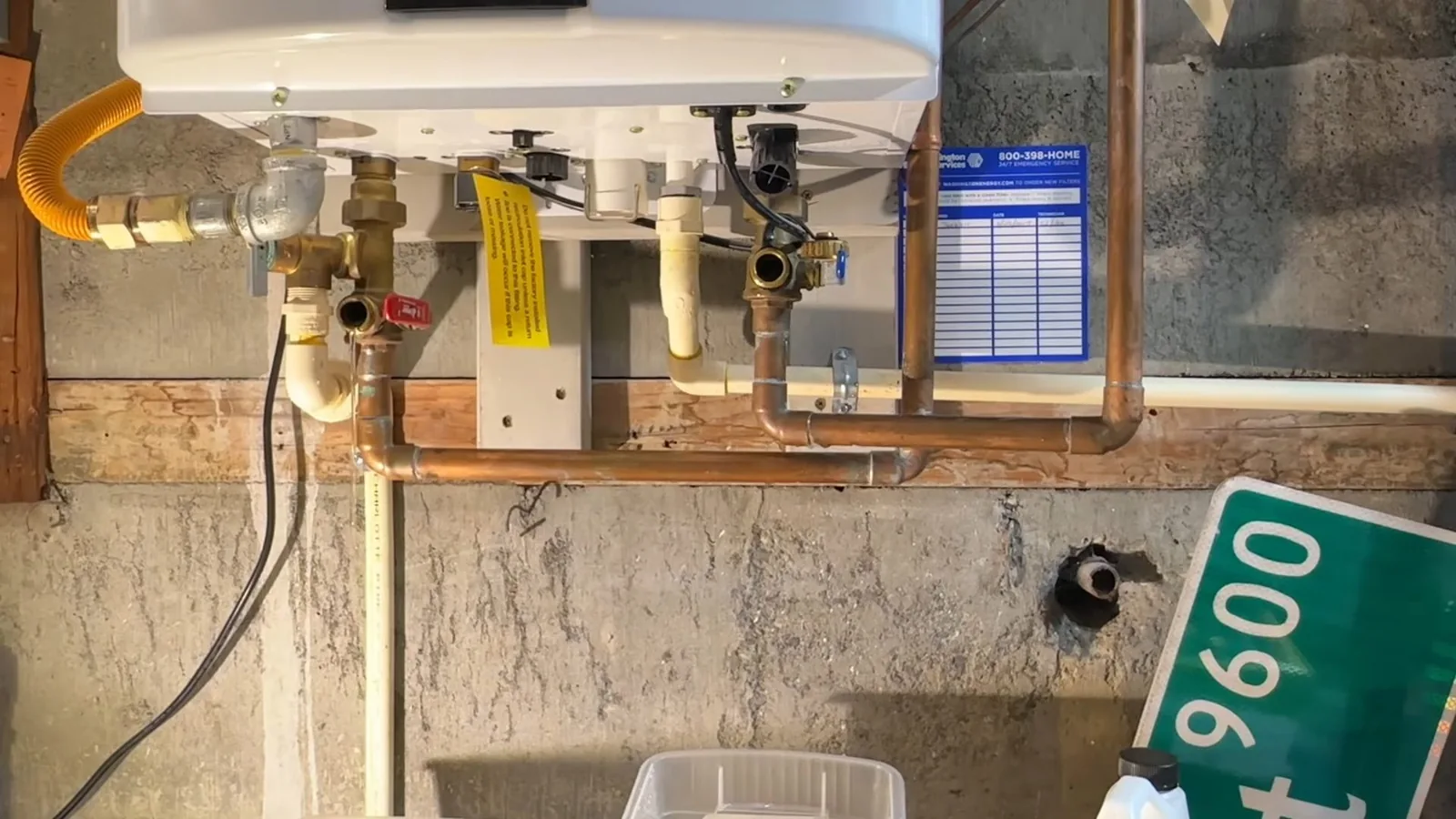
Scale is the main enemy of a tankless unit. Minerals in the water bake onto the heat exchanger, narrow the passages and make the unit work harder for the same output. Flushing with a descaling solution removes the buildup, and the interval depends on the water and the manufacturer, so follow the manual for your model.
That puts much of the local supply in the moderately hard to hard range, where scale builds steadily. Your own tap may differ, so test it. A softener or filter ahead of the unit slows the buildup, and softener and filtration covers how that works. Ask whether the unit has service valves fitted, because they make flushing a short job.
Keep the intake screen clean and check the vent and the condensate drain, where the model has one. A short yearly service visit catches a failing sensor or a partly blocked vent before the unit locks out and leaves the household without hot water at an awkward hour.
Tankless questions? Start with a call
Describe your current heater and the fuel it uses. A plumber can say what a tankless unit would need.
Hot water that runs out: the case for a tankless install
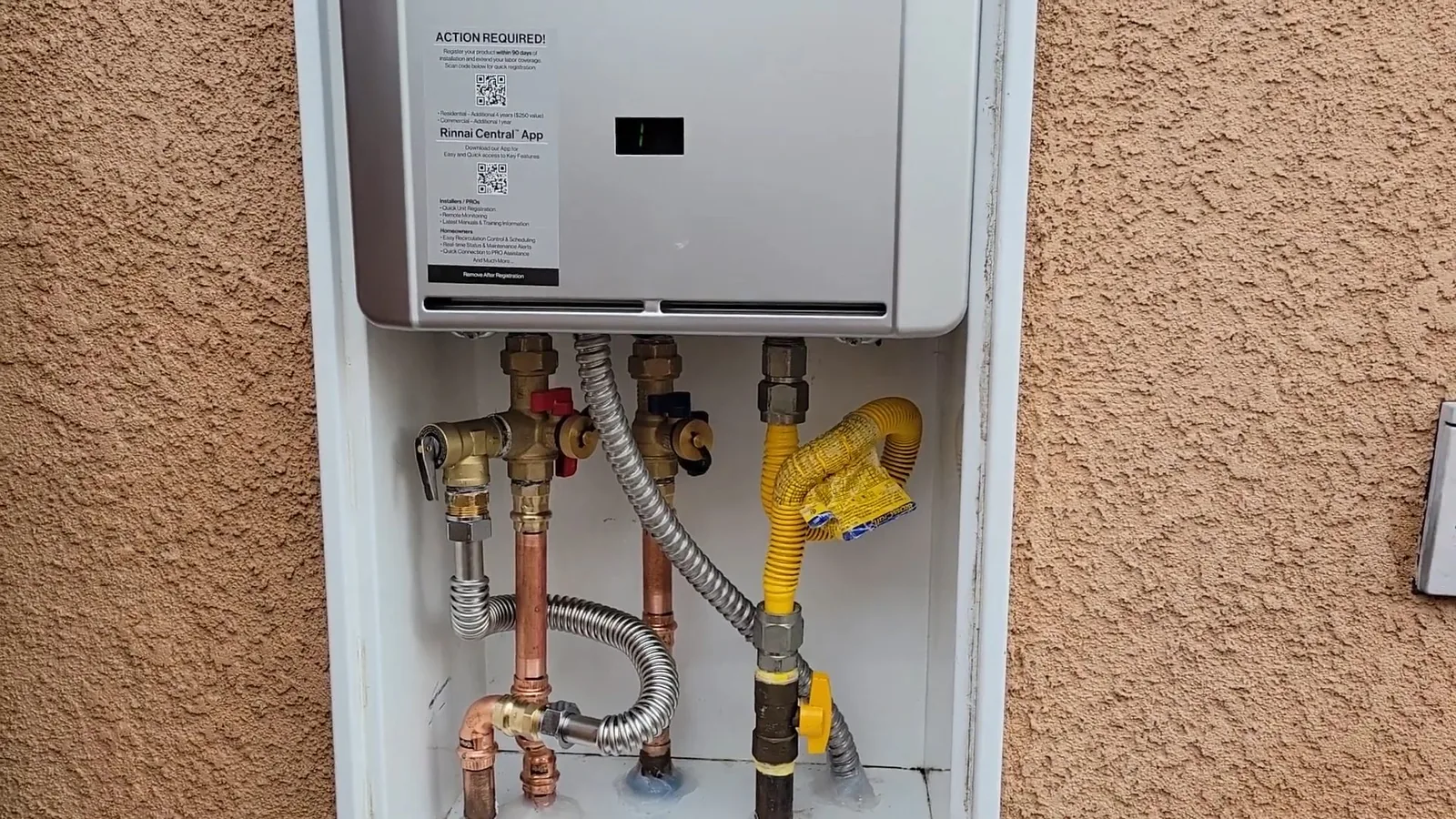
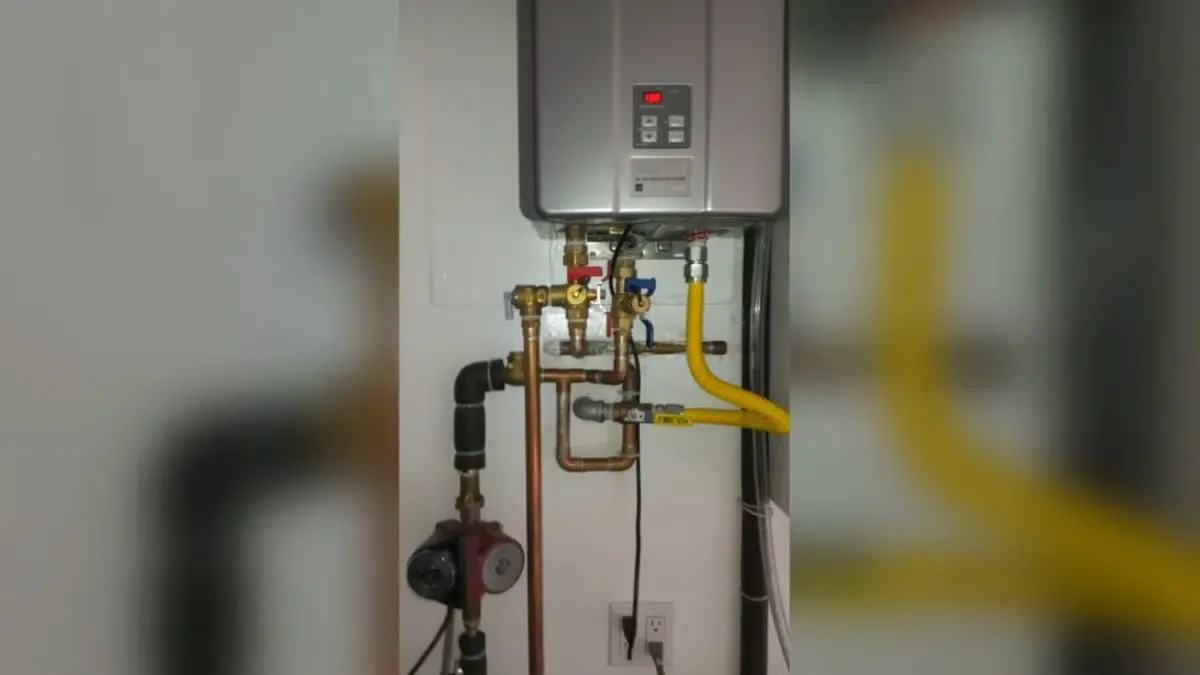
People usually ask about tankless after a cold shower, a rising gas bill or a tank that has started to leak. Installing one is a bigger job than a tank swap, because the unit often needs a larger gas line or a heavier electric circuit, a new vent and a place on the wall where the plumber can reach the service valves.
A plumber should check the gas meter capacity, the line size and run length, the panel space for an electric unit and the route for venting before quoting. Replacement or conversion from a tank is where most of the unexpected work hides, so ask for a written scope that names every item.
A new gas line or an upsized one falls under gas line repair visit, and the plumber will pull a permit for the installation. The California Plumbing Code requires one to install or replace a water heater, and the Building and Safety office at City Hall handles it.
Tankless repair and troubleshooting
Most tankless problems fall into a few groups, and the unit often shows an error code that points at the part. Check the manual for the code, and note it before you call. The table lists the usual symptoms, their common causes and the likely fix.
| Symptom | Common cause | What usually fixes it |
|---|---|---|
| Water never gets hot | No ignition, tripped breaker or a closed gas valve | Check supply, reset, or replace an igniter or element |
| Hot water, then a cold burst, then hot | Brief flow gap between uses, or a restricted flow sensor | Clean the filter and sensor, adjust fixture flow |
| Output falls over weeks | Scale on the heat exchanger or clogged inlet screen | Descale and clean the screen |
| Error code and shutdown | Vent, sensor or ignition fault | Read the code, then repair the part or the vent |
| Water leaks beneath the unit | A loose fitting or a cracked heat exchanger | Tighten or replace the fitting; a cracked exchanger needs a new unit |
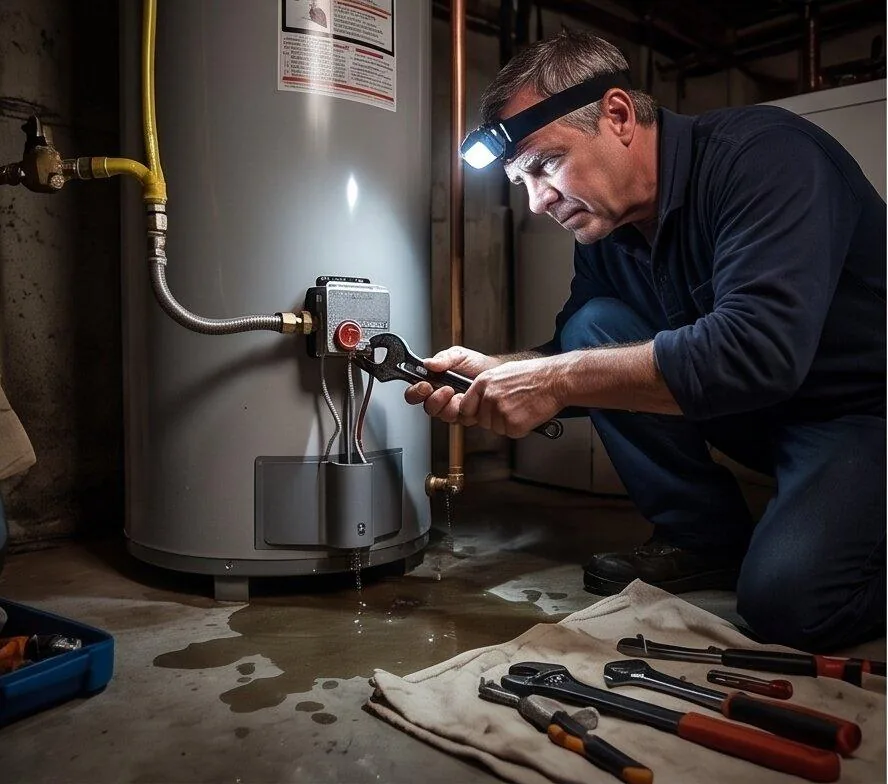
If the unit is old, or repairs keep returning, a plumber can compare the cost of fixing it against a new unit, and say which makes sense given its age and condition. For a tank that is failing, a new tank or unit installed is the comparison worth making.
Keep a tankless heater running well
Call the dispatch line to book descaling, a repair or a conversation about switching from a tank.
Tankless water heater questions
Will a tankless heater really give me unlimited hot water?
Not quite. It never runs out of stored hot water, but it can only heat so many gallons per minute. If several showers and a dishwasher run together, flow can exceed what the unit can warm and the water turns lukewarm. A plumber sizes the unit to your busiest moment, not your average use.
How often should a tankless water heater be flushed?
Follow the manufacturer's interval for your model, and shorten it when the water is hard. Flushing means running a descaling solution through the unit with a small pump, which dissolves scale on the heat exchanger. Units with service valves are far easier to flush, so ask about them when you buy.
Can I replace my tank heater with a tankless one in the same spot?
Often, but not always. The gas line, the vent and the electric supply decide it. Tankless units usually need a bigger gas line and a different vent from a tank, so the plumber has to check each. Ask for a written scope of work that names the vent, the gas line and the permit.
Why does my tankless heater show an error code?
Codes point to the system that stopped the unit: ignition, a sensor, the vent, flow or a safety limit. Look the code up in the manual and write it down. Many are cleared by a reset or by cleaning an intake screen, while a repeat code means a part has failed.
Hot water that keeps up with your home
Ring at any hour to go over gas supply, venting and which tankless models suit the house.
- Licensed and insured plumbers
- Same-day service when available
- 24/7 emergency dispatch