
Emergency Sewer Line Repair in Canyon Lake: Backups, Odors and Damaged Lateral Pipes
When sewage backs up into a tub, a floor drain or a toilet, the problem is usually in the pipe that carries waste out of the house, not the fixture. Call the dispatch line, stop using water and a plumber can inspect the line.
- Licensed and insured plumbers
- Same-day service when available
- 24/7 emergency dispatch
Signs the sewer line is failing, not just one drain
A single slow drain is usually a local clog. A sewer line problem shows up across the house and tends to repeat. The signs below, especially in combination, point away from the fixture and toward the buried pipe that leaves the building.
- Several drains slow or back up at the same time
- Sewage or dirty water rises in the lowest tub, shower or floor drain
- Gurgling from toilets or drains when water runs elsewhere
- A sewer smell inside the house, or outside near the cleanout
- A soggy, unusually green or sunken patch of yard along the line
- Drain cleaning that works for a few weeks and then fails again
Local housing mostly dates from the 1970s to the 1990s, so the buried pipe under a typical lot is now several decades old. Age alone does not mean failure, but it is a reason to inspect rather than keep clearing the same line.
What a camera inspection finds
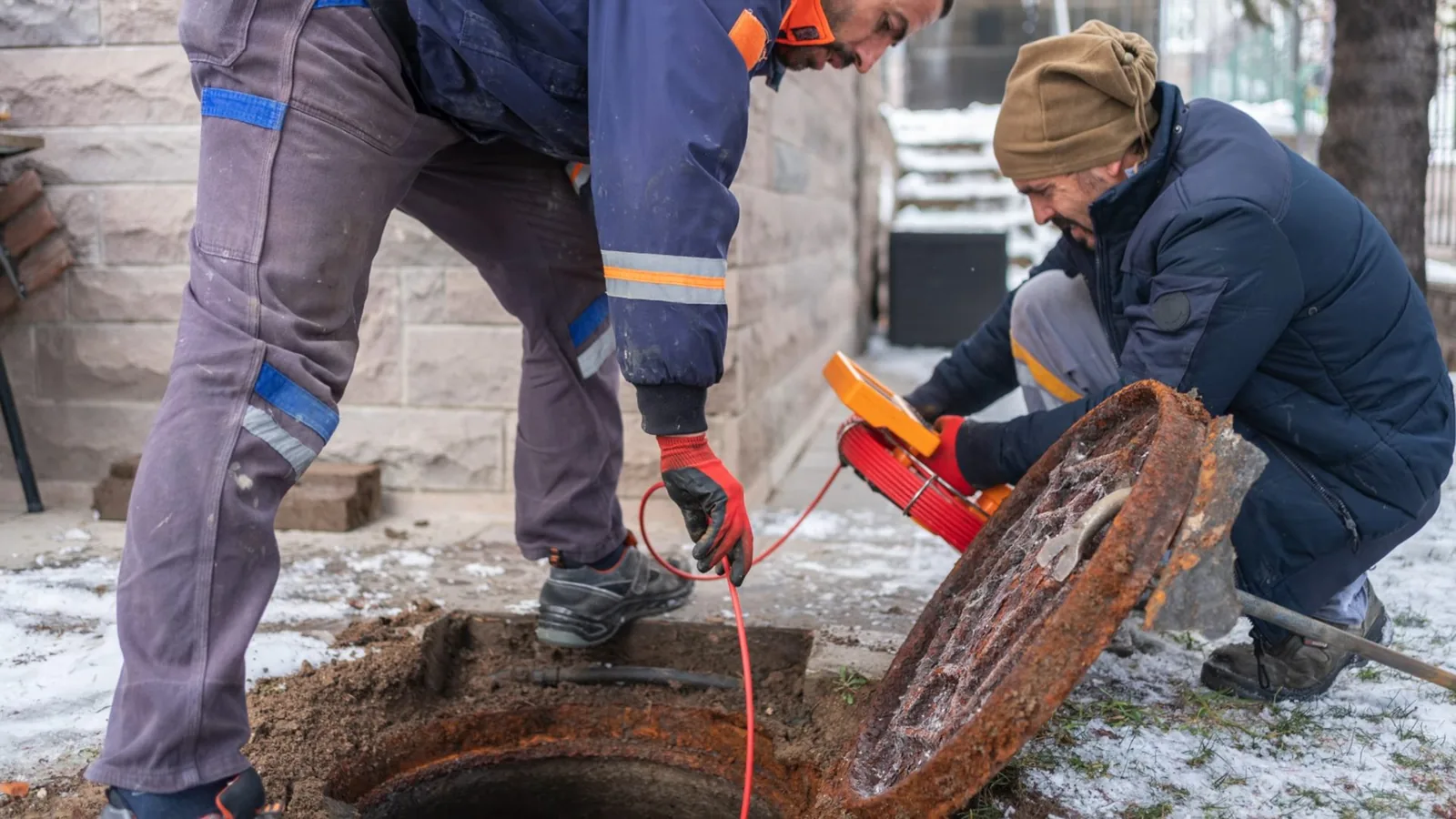
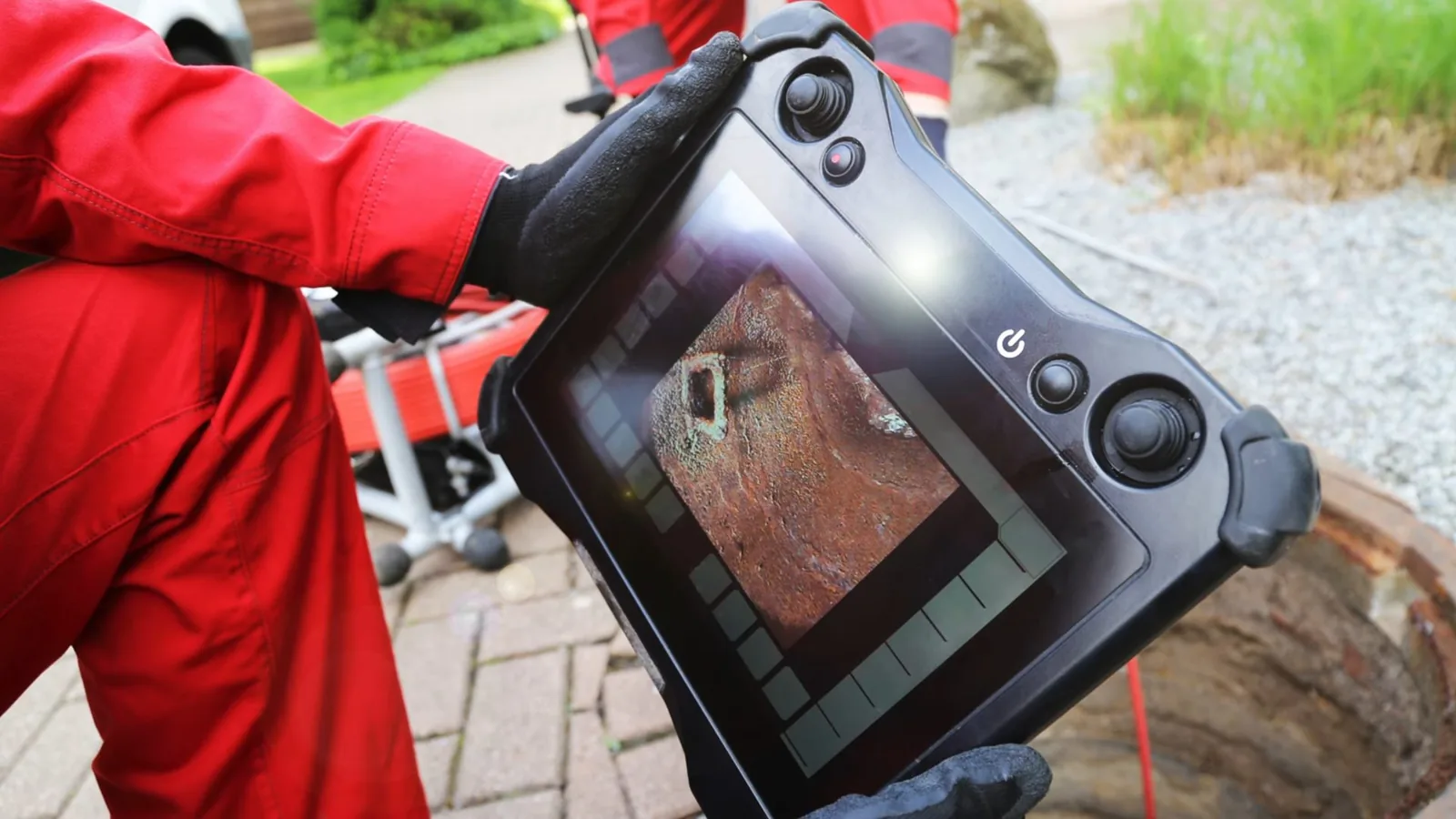
A small camera on a flexible cable goes into the line through a cleanout, and it shows the pipe from the inside, which doubles as sewer leak detection when water is escaping. The plumber can mark the position of a problem on the surface, which turns a guess into a repair plan. The table shows what the camera commonly finds and what each finding usually leads to.
| What the camera shows | What it means | Usual next step |
|---|---|---|
| Roots inside the pipe | Roots have entered at a joint or crack | Cut the roots, then decide if the joint needs repair |
| A low section holding water | The pipe has settled and no longer drains fully | Repair or replace that section |
| A crack or broken section | The pipe has failed at that spot | Spot repair, lining or replacement |
| Offset joints | Two pipe sections have shifted apart | Realign or replace the joint |
| Heavy buildup or scale | The pipe is narrowed by deposits | Sewer jetting to clean the line, then recheck |
The plumber dispatch line also answers sewer calls. Ask to see the footage or have the plumber describe where on the line each problem sits, measured from the cleanout. That detail lets you compare repair options, decide whether the sewer line needs work now, and keep a record that makes any later visit faster because the damaged section is already mapped.
Sewage coming up through a drain?
Call the dispatch line, stop using water and describe where it is surfacing. A plumber can tell you what to do until arrival.
Trenchless versus open trench: repair or replace the line
Once the damage is located, the options come down to how much of the pipe is affected and how much of the yard, driveway or landscaping the work can disturb. A short damaged section and a pipe that has failed along most of its length call for different answers, and the camera footage decides which one applies.
Trenchless repair
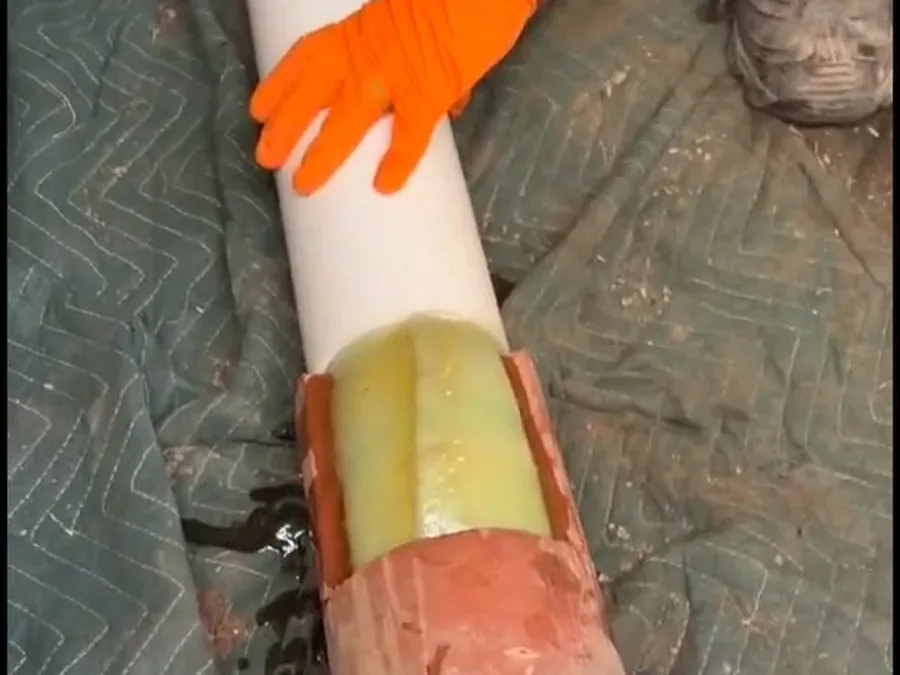
The damaged section is lined, or replaced by pipe bursting, from a small access point, so most of the yard stays intact. It suits pipe that is sound enough to accept a liner or be pulled through.
Open trench replacement
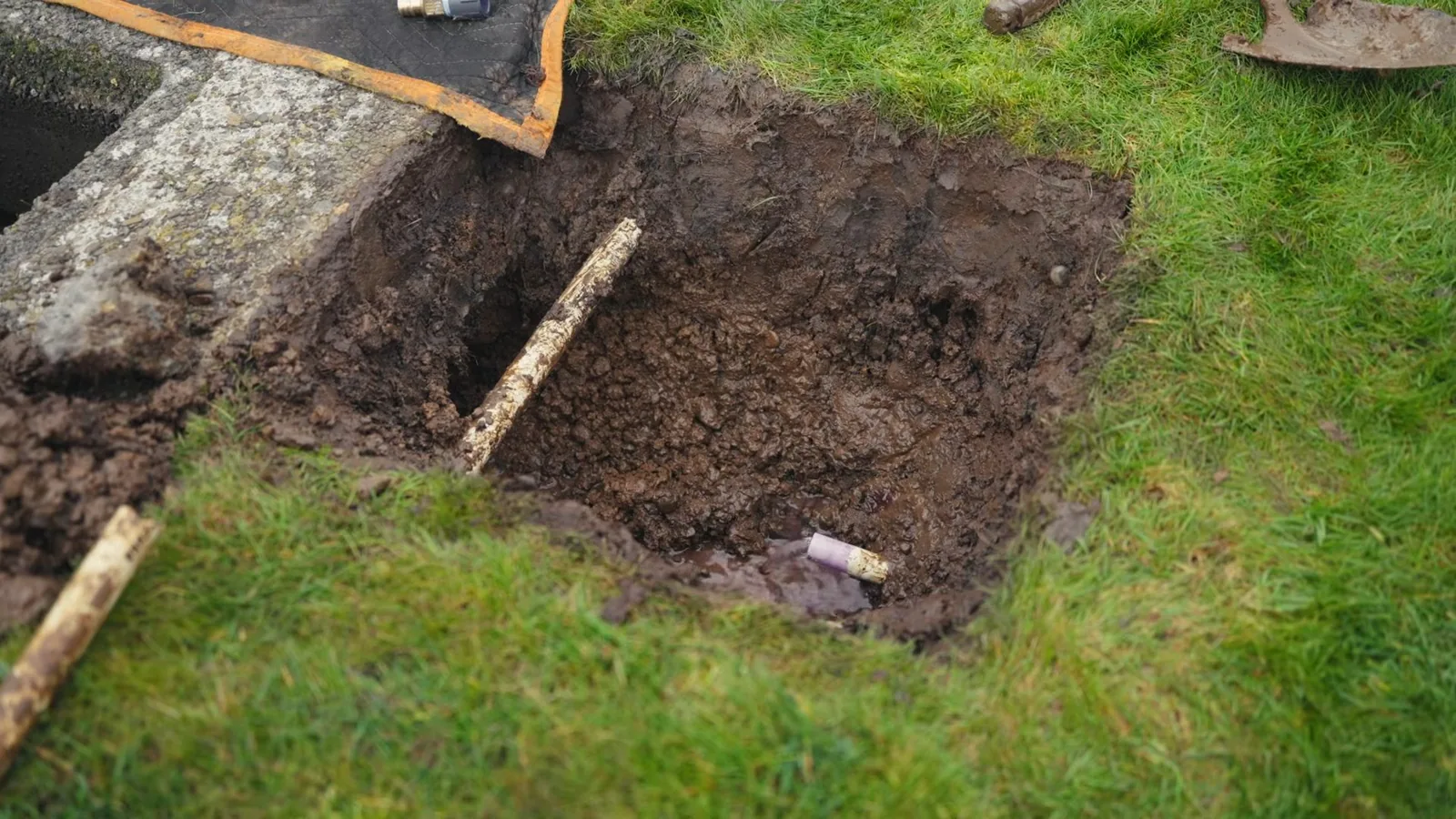
Sewer excavation exposes the pipe so it can be replaced in the ground. It is the sturdier fix for collapsed or badly shifted pipe, but it disturbs the surface above.
The plumber should explain why one method suits your line and what the surface restoration involves, such as concrete, landscaping or irrigation lines that sit in the path. Ask who handles that restoration and whether it is part of the repair or a separate job, so nothing is left open at the end.
Whose pipe is it? Lateral, main and district
The sewer lateral runs from the house to the public main. Homeowner versus city responsibility for the pipe often changes at a defined point, which can be the property line or the connection to the main. Knowing where that point is helps you decide who to call and who pays for which section.
If the blockage turns out to be in the district’s main rather than your lateral, the plumber can confirm that with the camera and you can report it to the district. Smaller clogs that cleaning can clear are covered under drain cleaning visit.
Digging, 811 and access inside the gates
Any trenched sewer work needs notice to 811 first. The notice window runs from 14 calendar days ahead down to a minimum of two working days, and the paint and flags that follow show where gas, electric and water lines are buried. Ask the plumber whether the call is made for you and how it affects the start date, since a job that is ready to go can still wait for the markings to be completed.
Canyon Lake has three gated entrances, and most roads inside the gates are private and maintained by the property owners association. For a job that needs a truck, trenching equipment or a street-side cleanout, ask the plumber to confirm access and any association rules in advance so no one is stuck at the gate.
What to do if sewage is backing up
Sewage is a health hazard, and acting quickly keeps the damage small and the cleanup shorter. These steps are safe to take before the plumber arrives, and they require no tools or special equipment, only a little caution around the affected area.
- Stop running water: no toilets, showers, dishwasher or laundry.
- Keep children, pets and bare feet away from the affected area.
- Open windows if the odor is strong, and keep fans off if the water is near outlets.
- Photograph the backup with the date for any insurance claim.
- Call the dispatch line and say which drains are affected.
Once the line is repaired, drying and sanitizing the affected rooms is the next job, and water damage restoration visit covers it. Ask the plumber to note on the invoice where the backup reached, since the cleanup crew and any insurer will want that detail.
A sewer problem does not wait
Call now to reach a plumber serving your area. Say where the backup shows and which drains are slow.
Sewer line questions answered
How can I tell whether the clog is in my line or in the city main?
If only your house backs up, the blockage is usually on your lateral. If neighbors also have problems, the main may be involved. A camera pushed in through the cleanout shows which side of the connection holds the clog, and the plumber can then tell you whether to report it to the district.
Do tree roots really get into sewer pipes?
Roots follow moisture and enter through joints, small cracks and loose connections, then grow into a mat inside the pipe. Cutting them clears the line for a while. If the pipe is cracked at the entry point, they return, and the fix is to repair or replace that section.
Will a sewer line repair tear up my whole yard?
Not necessarily. Trenchless methods work from one or two access points, so most of the yard stays intact. Open trench work does disturb the ground along the line. The plumber should show you the planned route and say which surfaces will be disturbed before the work is agreed.
What should I do if a sewer smell comes from the yard but nothing is backing up?
An odor with no backup can mean a cracked pipe, a dry trap or an open cleanout cap. Check that outdoor cleanout caps are on and run water in rarely used drains. If the smell persists or the ground is damp or sunken, have the line inspected before it fails.
Stop the backup and fix the pipe behind it
Call the dispatch line any hour. A plumber can inspect the line, find the damage and explain the repair.
- Licensed and insured plumbers
- Same-day service when available
- 24/7 emergency dispatch